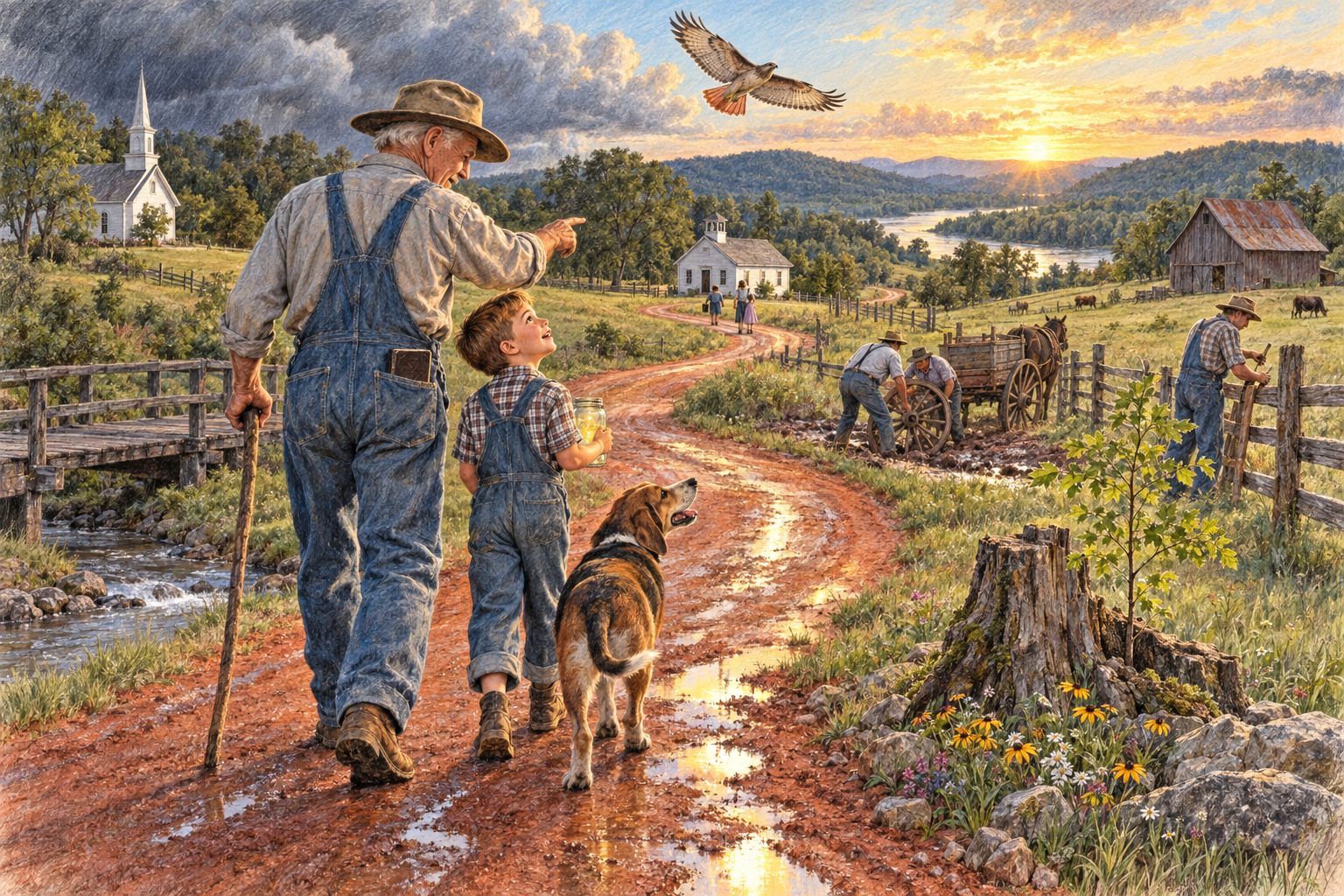
Sundays on Walker's Bend
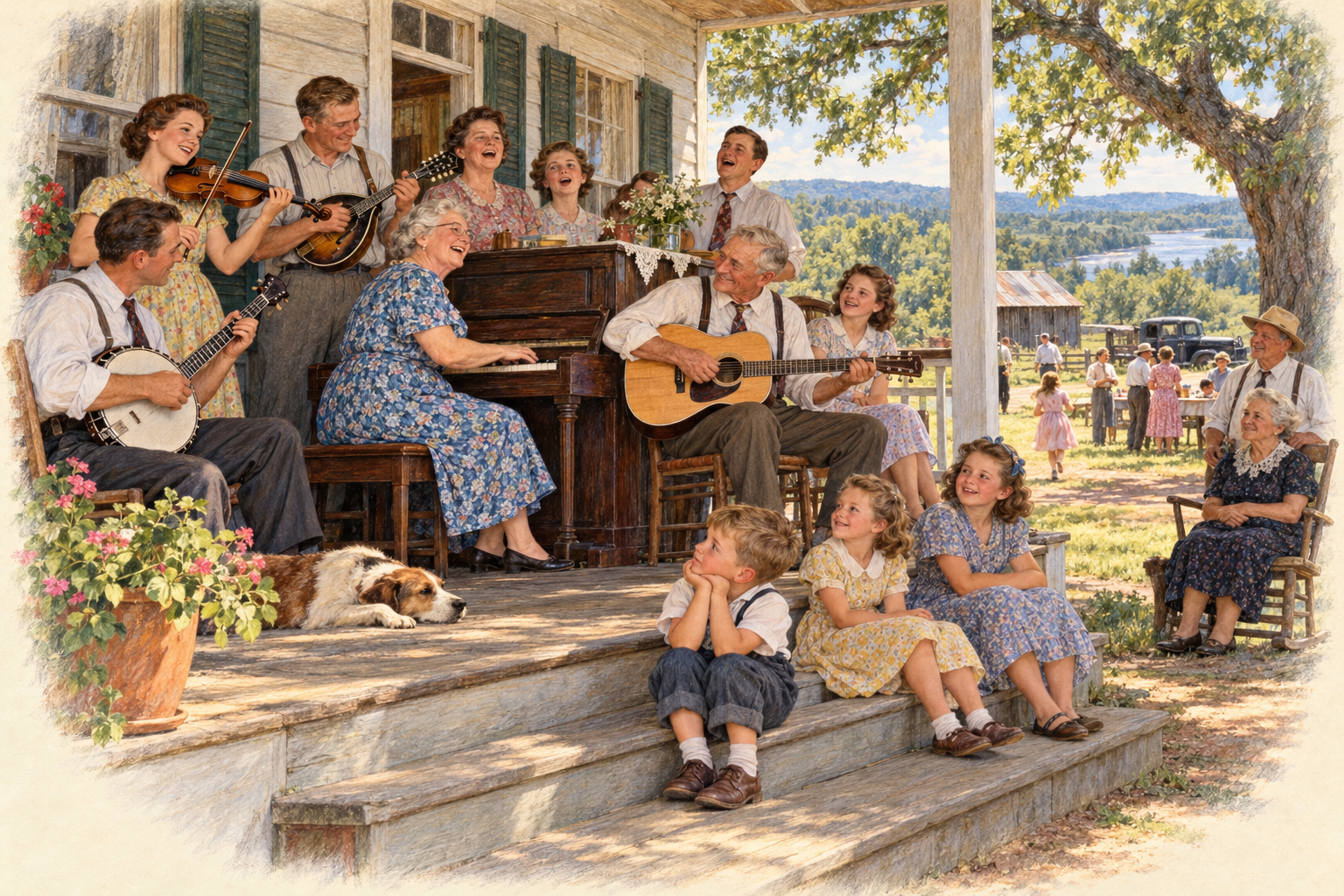
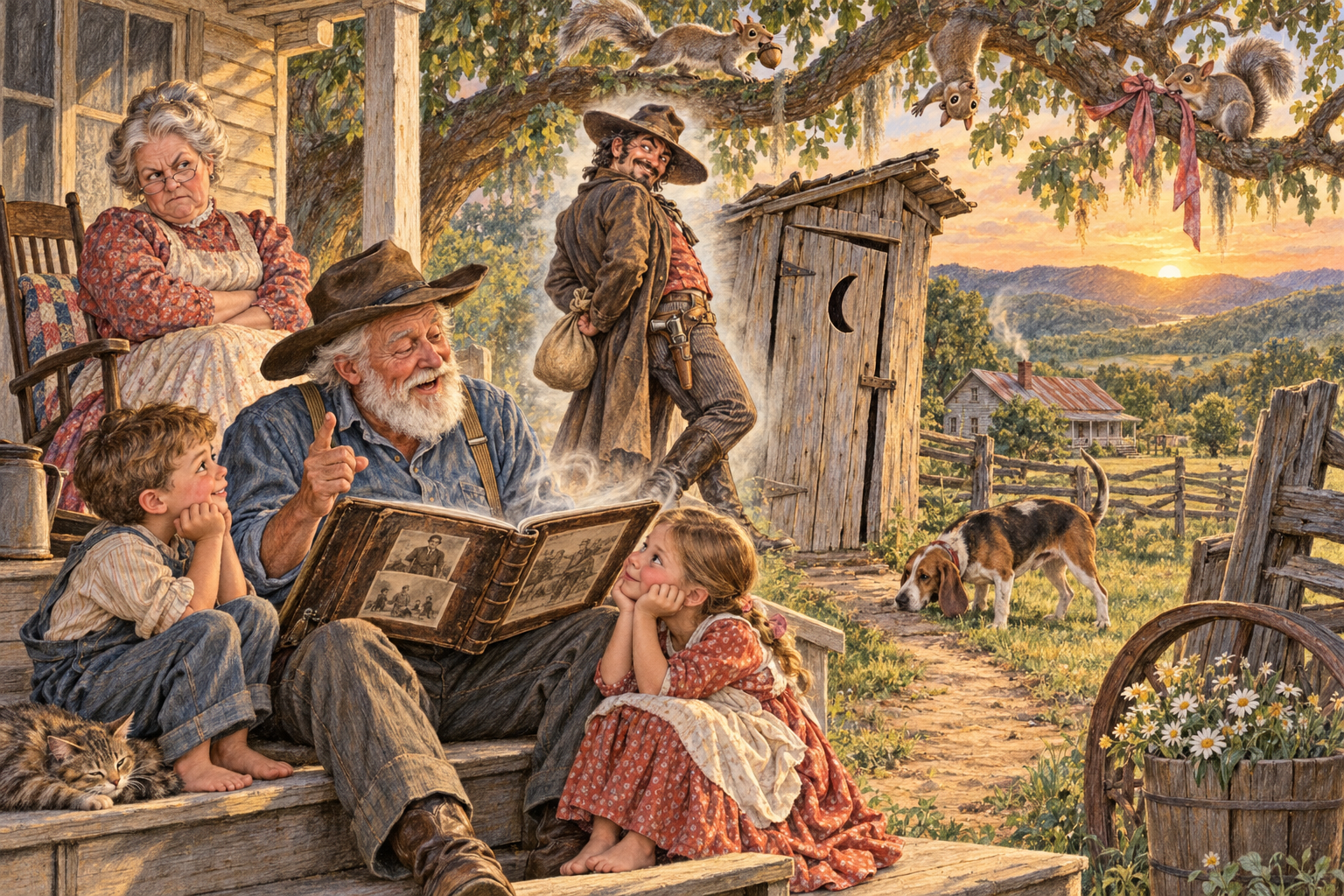
If you had walked up the dirt path to my grandparents' farmhouse on a Sunday afternoon on Walker's Bend, you would have heard the music before you reached the porch. A banjo picking out a fast rhythm, a fiddle sliding into a hymn, somebody keeping time with a boot heel on the wooden floorboards. Grandma sat at the upright piano we kept rolled out on the porch, her white apron draped over the corner. Thirty or forty relatives filled the yard—uncles, cousins, neighbors, and a few strays nobody quite remembered inviting. No televisions. No phones. No hurry. Just people being together.
In this hectic, Tik-tok connected, 24/7 news collected, and Wi-Fi selected world; you see more advertisement for Xanax and Zoloft than you do for milk and bread. With heads down, fingers tapping and staring into a screen, the more we "connect" the more disconnected we are. Our digital culture is driving us all crazy. Some are already there. Look in your rear-view mirror, the rest of us are not far behind; made me think about my raising.
My main goal on those cold North Alabama winters was to make it to the only source of heat in our old farmhouse, a potbellied stove roaring with a hickory wood fire out in the kitchen. Pulling up my Levi's I had to be careful not to sit down after backing up to the fire, those metal rivets were red hot! The smell of red-eye gravy and frying country ham straight from our smoke house out back finished waking me. As I sat at the table, mother would tousle my hair, Granddaddy sitting in his cane bottom chair at the head of the table, with his sweat-stained Stetson work hat hung on the back, poured hot coffee from his cup into a saucer and blew on it before he slurped it down.
A large brown box radio with exposed tubes glowing out the back, tuned to our local radio station, WVOK. With an auctioneer's cadence Joe Rumore would announce, "Cut and Canners are up one and three quarters, freshened heifers were trading at lower to market ratio, green beans continue to falter in indeterminate market conditions, will be right back after the sick and shut-in report with Ima Gabney, brought to you by the Dead and Deader funeral home." All the farmers in the valley tuned in, listening to every fast-paced word. This cryptic report determined their financial future just as surely as the Wall Street Report shaped the business world.
On the courthouse square, there was a cacophony of guitars, fiddles and banjos weaving intricate melodies with local singers adding to the audio tapestry, giving words to our shared Irish and Scottish histories in ballads, ditties, and hymns. Skillfully stitched, handmade quilts with red, yellow, and green squares competed for your attention among woven baskets, wooden bowls, and ladles. Every Saturday was a county wide family reunion, reconnecting with distant kin and neighbors.
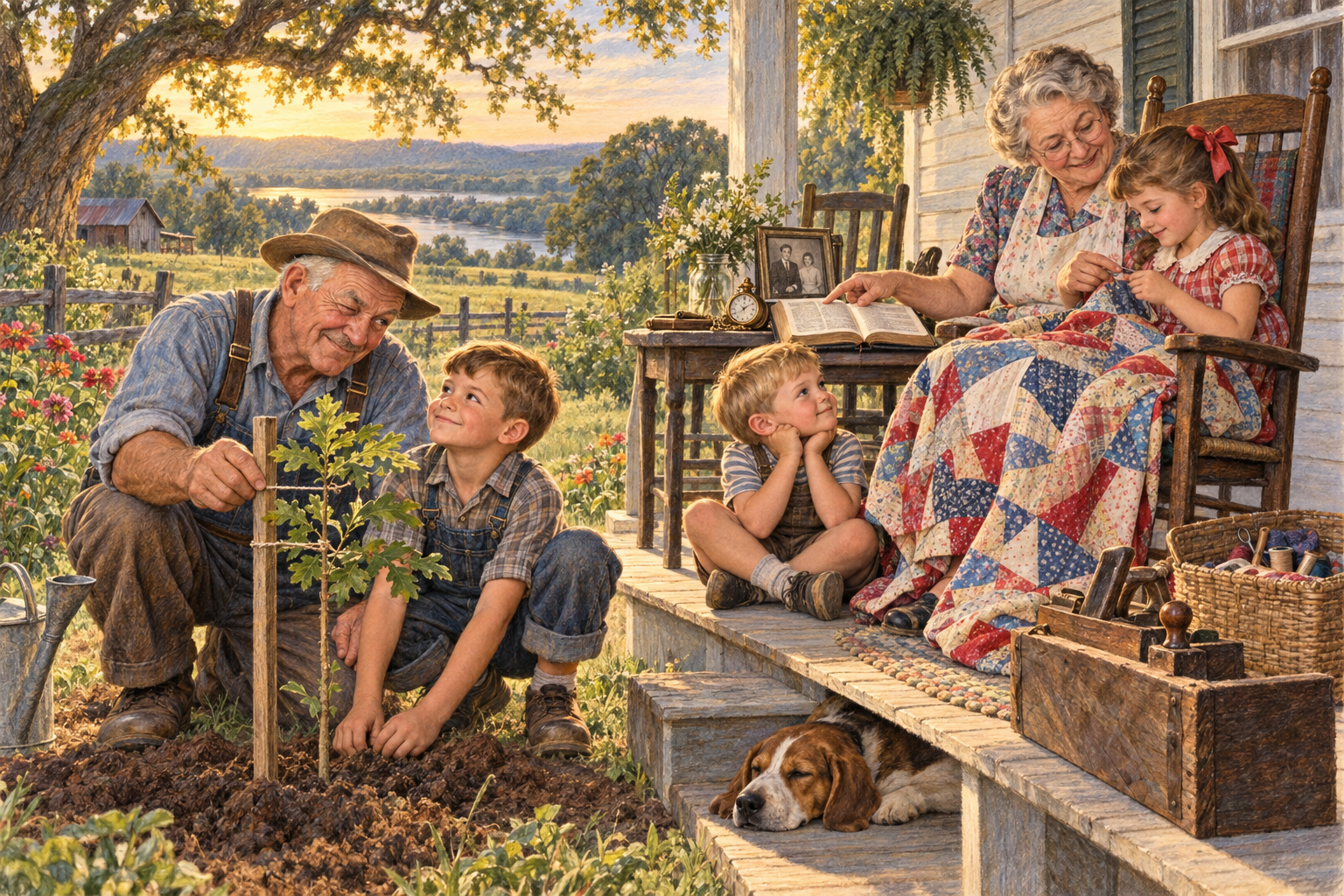
Sundays were a totally different pace on Walker's Bend, even the early morning crowing of a rooster sounded righteous. After church, we would gather at Grandma and Grandpa's house; in-laws, outlaws, preachers, sinners and strays, there were never less than thirty or forty for the afternoon of food, music and visiting. No radios, iPads, iPhone, internet, or TV, just humans being humans, talking, listening, and enjoying just being together.
Grandma, who played the piano at the church, would have her piano rolled out on the front porch, take off her well-worn white apron, drape it on the corner, and sit down to play and sing. Her favorite music was the St. Louis Stomping Blues. Then she would pound the keys, look up at my granddaddy, wink, and sing, "I'm a wild, wild woman and you're a lucky, lucky man." I was nearly grown before I understood what the adults were laughing about.
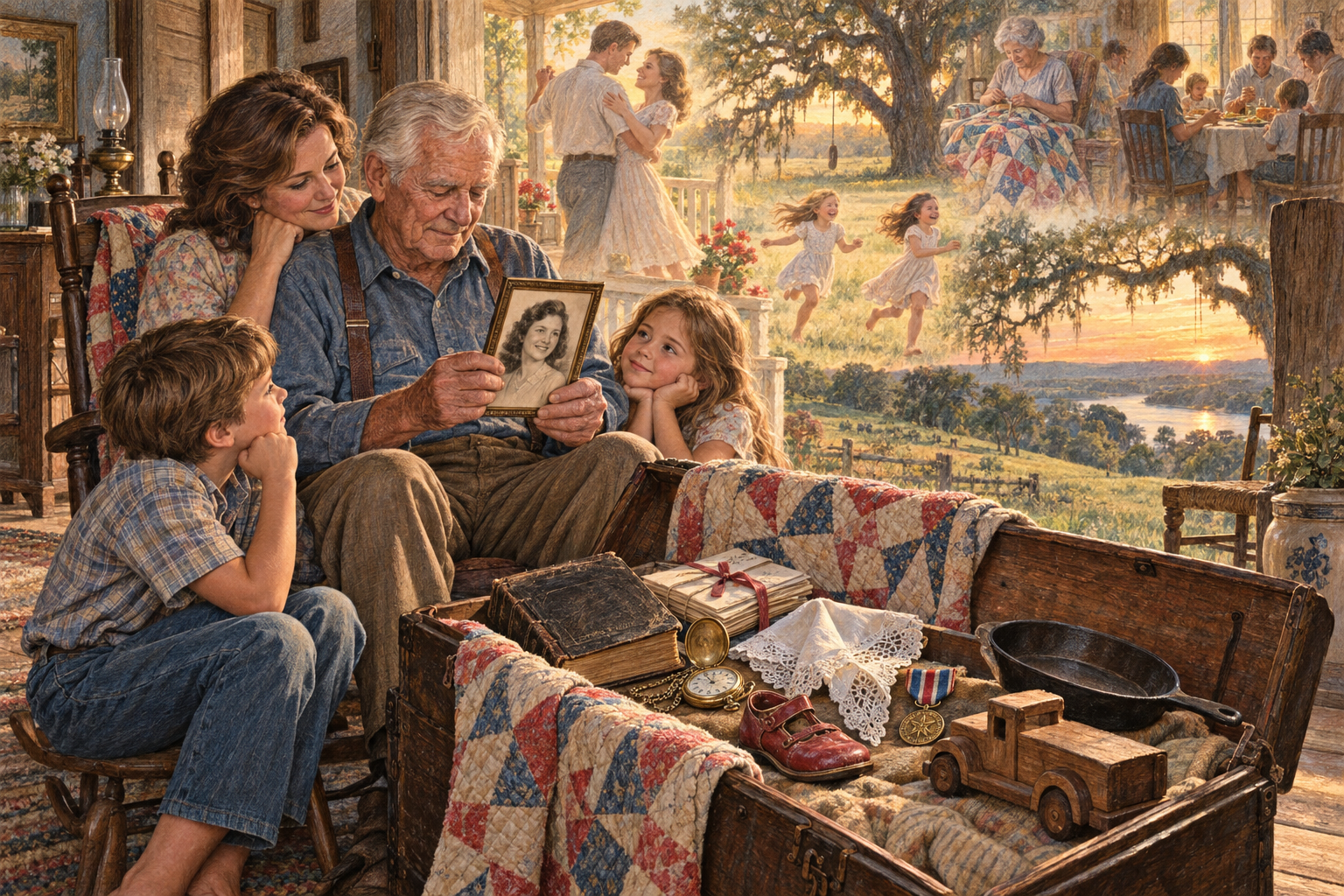
Some might have thought of us as parochial, restrictive, or just plain backwards; in fact, it was just the opposite. This place was a Spiritual, meditative, and peaceful oasis. You could travel to Tibet, India, or Santa Fe and would not find more refreshing and spiritual connections than the Sundays we spent with each other on Walker's Bend.
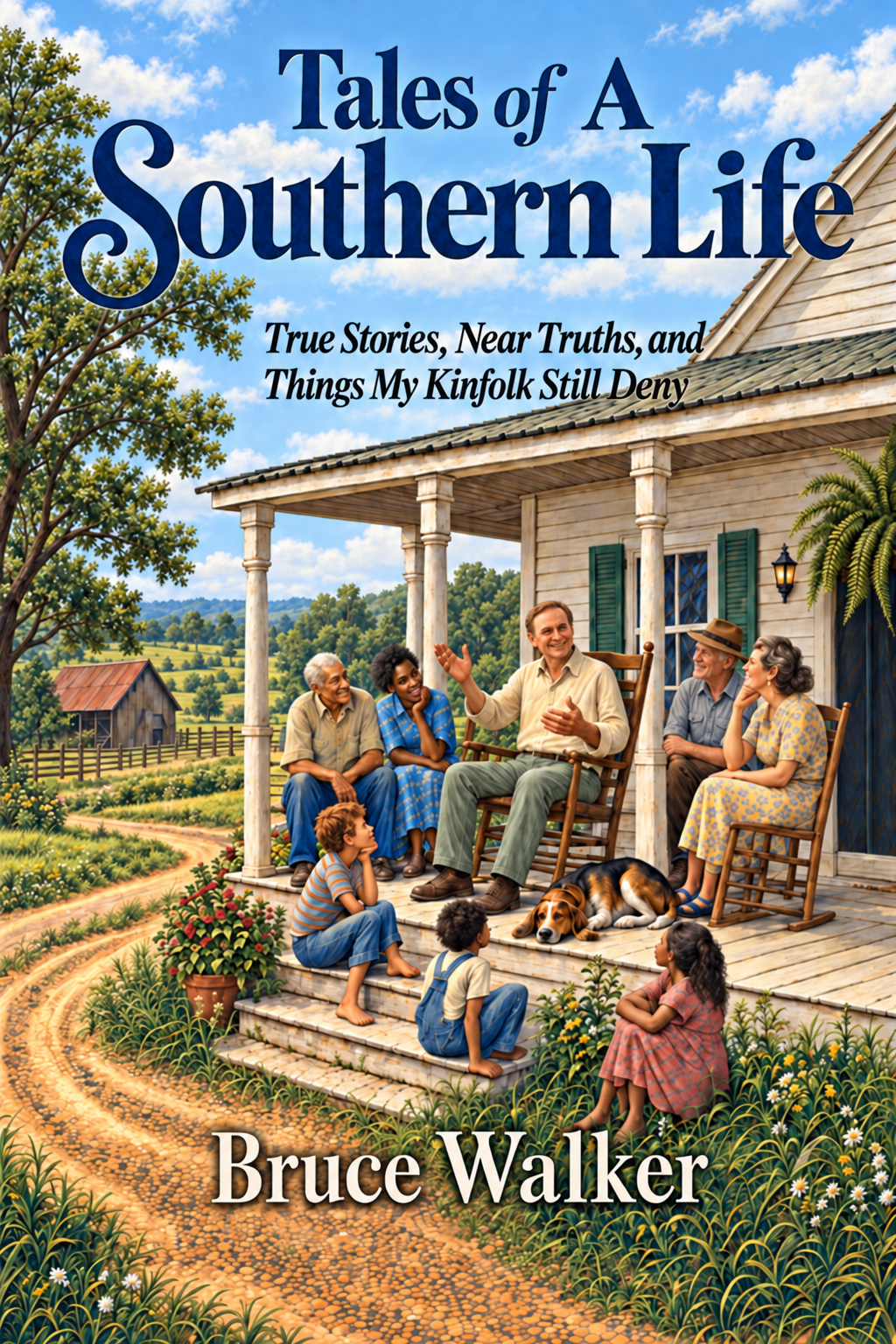
(Rest of the story is in the book), "Tales of a Southern Life", by Bruce Walker